


Myanmar’s 2021 Post-coup conflicts have reached a stalemate since late 2024. Min Aung Hlaing is coming back along with Myanmar’s resistance coalitions has lost the political and Diplomatic war, even not a military affair.
Why has the NUG and the Myanmar Gen-Z Movement Lost Momentum as we approach almost six years of military coup: There are Several Contributing Factors. The following are several factors that, in my view, explain why the momentum of Myanmar’s post-coup social movement and the National Unity Government (NUG) has gradually weakened.
1. The French Revolution Dilemma
From the beginning of the 2021 uprising in Myanmar, I worried that it might follow the path of the French Revolution: a movement that succeeded in overthrowing the monarchy but struggled to establish a stable and lasting framework for liberty. Myanmar’s situation, however, has proven even more complicated. In some respects, it resembles the tragic complexities seen in Syria. Around the world, most Gen-Z movements challenge existing establishments. Myanmar’s Gen-Z movement was different. One of its major mistakes was placing excessive faith in the NUG, effectively handing over the driving force of the movement to a political leadership largely derived from the pre-existing establishment. As a result, the movement became more focused on preserving elements of the old political status quo than on building a genuinely new vision centered on liberty, equality, and social justice. Movements that lack a clear strategic vision or coherent political framework often lose momentum over time. As conflicts become prolonged and people grow fatigued, public enthusiasm inevitably declines.
2. Failure to Build an Umbrella Coalition
Neither the NUG nor its predecessor, the NLD, successfully built a genuine umbrella coalition. One of the strengths of the former National Coalition Government of the Union of Burma (NCGUB) was its ability to negotiate agreements and build partnerships with ethnic organizations over many years. The NUG, however, never fully embraced this principle. Instead, the NUG became increasingly entangled in administrative, military, and political management issues while attempting to centralize authority. It also failed to learn important historical lessons. For example, its approach toward northeastern armed groups often ignored historical realities and geopolitical considerations. Organizations such as the MNDAA and UWSA have historically operated in a very different political environment from the ethnic resistance movements along the Thai border. Likewise, the Communist Party of Burma had its own distinct political traditions. Many of these groups have never fully embraced federalist concepts in the same way as border-based ethnic organizations. A successful umbrella front could have provided: Unity across differences, greater collective power, protection of hard-won liberties, representation of diverse voices, strategic coordination, legitimacy, and solidarity. Instead, much energy was devoted to social media campaigns and algorithm-driven political messaging. This often produced polarization, online hostility, and ineffective propaganda rather than genuine coalition-building.
3. Geopolitical Constraints
Geopolitical constraints became increasingly significant after the coup, especially from late 2023 onward. However, the opposition movement consistently underestimated their importance. The movement failed to establish effective back-channel diplomacy and cross-border political relationships with key neighboring states, particularly China, India, and Thailand. Regardless of moral legitimacy, no revolutionary movement can completely ignore the realities of regional power politics. Accordingly, whether you want to protect your society and country from collapse or build positive peace, neighbouring countries are important. ( Galtung Positive Peace and Jared Diamond: Collapse, How society choose to fail or Succeed?)
4. Failure to Connect with International and Regional Causes
The movement also struggled to link its cause to broader international or regional issues. Many successful liberation movements gained global sympathy by connecting their struggle to universal values and wider political currents. The Palestinian cause, for example, has generated significant international attention and solidarity. Myanmar’s opposition movement, by contrast, often remained inward-looking. Ironically, despite presenting itself as democratic and inclusive, segments of the movement continued to exhibit nationalist and factional attitudes that limited broader international engagement. The movement often underestimated how international relations, power politics, and coalition-building operate in practice.
5. Lessons from Sun Tzu
When people hear the name Sun Tzu, they usually think only of military strategy. However, many of his principles apply equally to politics, peacebuilding, and social movements. Sun Tzu argued that success in any conflict requires understanding three fundamental elements: Know yourself. Know your opponent. Know the terrain. Only when these three factors are understood can an effective strategy be formulated. A useful comparison can be drawn with the history of the Shan revolutionary movement. Over more than sixty years, many Shan leaders struggled to build political institutions and long-term preparations that reflected the realities of their people.
As Nelson Mandela observed, those resisting oppression often find themselves reacting to the strategies and rules imposed by those already in power. Mandela’s success stemmed partly from his willingness to study his opponents thoroughly. He learned their language, understood their political structures, and carefully analyzed their strengths and weaknesses. The contemporary Burmese opposition has often repeated mistakes made by earlier revolutionary movements. Strategic planning, realistic assessments, and political timing have frequently been inadequate. Sun Tzu also emphasized unity. History provides a striking example. The kingdom of Nanzhao in Yunnan and Dai Viet (Vietnam) were both multiethnic states. Yet when confronted by Mongol invasions, Dai Viet possessed a stronger national identity and social cohesion. It survived and eventually evolved into modern Vietnam. Nanzhao disappeared and never re-emerged as an independent state. The lesson is not about territorial expansion but about political survival. Cooperation alone is insufficient if there is no strong collective identity binding society together. An alliance is not enough. A durable movement requires a deeper sense of national cohesion and shared purpose.
6. Human Leadership and the Homo Sapiens Advantage
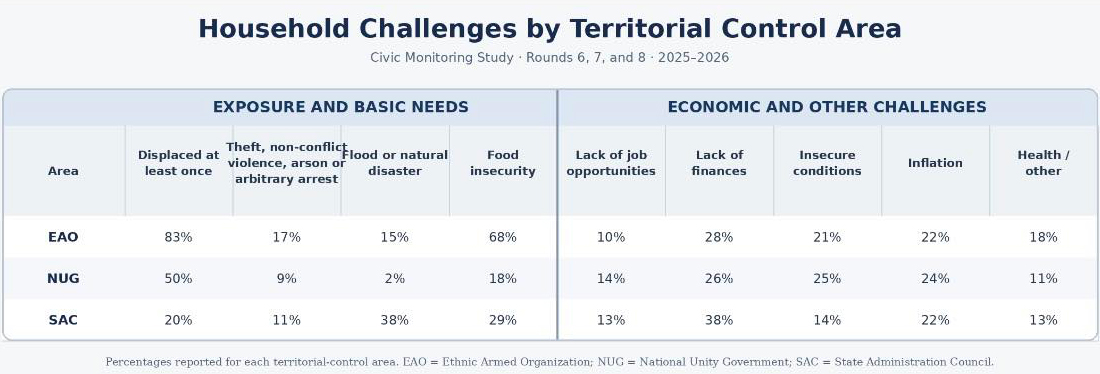
Human beings differ from other animals not merely because of intelligence but because of their capacity for organization, management, and leadership. Human leadership involves the ability to influence, coordinate, and guide large groups toward shared goals. Unlike animal hierarchies, human leadership relies on communication, institutions, culture, and collective decision-making. Many animals are physically stronger than humans. A lion may dominate its territory, but lions have never built complex institutions capable of organizing hundreds of thousands or millions of individuals. Humans succeeded because they developed systems of authority, cooperation, and administration. After the coup, enormous numbers of young people joined the resistance movement. However, mobilization alone is not enough. A movement also requires effective leadership structures capable of organizing, coordinating, and sustaining collective action over the long term. In this respect, the NUG struggled to transform popular energy into a coherent and durable political project. Turns of screw is the whole country facing human security problem somehow those who live under resistance forces’ areas or Military control area. The latest research highlights how human security challenges are growing for the people.
7. The Legacy of the NLD Era (2012–2021) and Burman Nationalist Assumptions
Both the “Red” camp (NLD/NUG) and the “Green” camp (the military and USDP) have historically been influenced by forms of Burman nationalism. One consequence is the difficulty of imagining a genuinely federal union in which a Burman state would exist as one constituent unit among several ethnic states on an equal basis. Another issue concerns the country’s name, official language, and the overwhelming dominance of Burmese-language knowledge production. These factors have shaped how many Burmese people understand national identity. Some assume that being identified as “Myanmar” is equally inclusive for everyone. Yet they may simultaneously look down upon ethnic communities that do not speak Burmese fluently. Historically, many members of the Burman majority paid little attention to military campaigns conducted in ethnic regions, even when those operations involved severe abuses. Although some media organizations have become more sensitive to cultural and linguistic diversity, political and financial pressures have often limited their willingness to advocate for deeper structural reforms. The post-coup opposition’s inability to build a durable political pact with ethnic organizations stems from many factors. However, one persistent obstacle has been the unresolved issue of Burman chauvinism. For example, many opposition groups remain reluctant to support the creation of a Burman state as a constituent unit within a future federal system. Some view such an arrangement as a reduction of their existing status because they already identify themselves with the state as a whole. As a result, opposition politics often remains influenced by narratives and assumptions inherited from earlier periods rather than embracing a truly federal vision based on equality among all national communities.
Sai Tun Aung Lwin
Sai Tun Aung Lwinis an emerging peace scholar, researcher, and journalist specializing in ethnic politics, federalism, borderland governance, and conflict transformation in Myanmar. With eight years of research experience, he has contributed valuable insights into Myanmar’s peace process, ethnic conflicts, and governance. He has served as a Senior Researcher at the Pyidaungsu Institute for Peace and Dialogue and an Affiliated Research Fellow at RCSD, Chiang Mai University. His distinguished professional background includes journalism and media work with BBC Burmese, RFA Burmese, and local media. He has presented his research at prominent international conferences in Thailand, Singapore, and Taiwan.
